

Trust & Safety
What Is a Verified Review? The Complete 2025 Guide
In 2025, the distinction between a verified and an unverified review is more critical than ever. Here's what verification means, how it works, and why it matters for consumers and businesses.
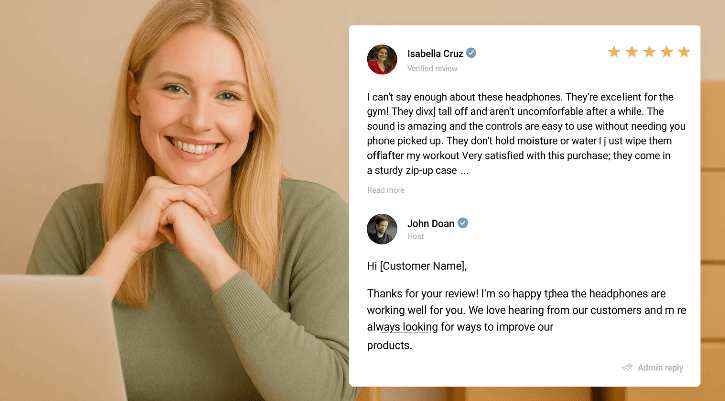
In the digital marketplace, the term "verified review" has become a gold standard for trust. But what does it actually mean, and why is it so important? In 2025, with the internet flooded with opinions, the distinction between a verified and an unverified review is more critical than ever. A verified review is one where the review platform has taken steps to confirm that the person leaving the feedback has had a genuine experience with the business. This process separates authentic customer feedback from fake, fraudulent, or manipulated content, creating a more reliable ecosystem for both consumers and businesses.
Proof of Experience: The Core Principle
The core principle behind a verified review is proof of experience. Unlike a standard review that anyone can post without any evidence, a verified review is linked to a confirmable transaction or interaction. This proof can come in many forms, but it must be something that ties the reviewer to the business in a credible way. The goal is to ensure that the feedback is coming from a real customer who has a legitimate basis for their opinion, rather than a competitor, a paid promoter, or a bot.
Purchase Confirmation (E-Commerce)
One of the most common methods of verification is through purchase confirmation. In an e-commerce setting, this is often automated. When a customer buys a product, the business can send them a review invitation email linked to that specific order. When the customer clicks the link and leaves a review, the platform automatically flags it as "Verified Purchase" because the system knows the review originated from a completed transaction. This creates a closed-loop system where only actual buyers can leave verified feedback.
Proof Submission for Services and In-Person Experiences
For service-based businesses or in-person experiences, purchase verification can be achieved by submitting proof, such as a receipt, an invoice, or an order confirmation number. On a platform like Tellacity, a customer can upload a photo of their receipt or enter an order ID when they write their review. The platform's moderation team then checks this evidence to confirm its legitimacy. If the proof is valid, the review earns a "Verified Experience" badge, giving it a higher level of credibility.
System Integrations
Another powerful verification method involves integrating a business's systems directly with the review platform. For example, a business can connect its e-commerce platform (like Shopify or WooCommerce) or its customer relationship management (CRM) software to Tellacity. This allows for the automatic triggering of review invitations after a customer completes a purchase or a service appointment. Because these invitations are generated from the business's own records, any resulting reviews are automatically verified.
Email Domain Verification (B2B)
Some platforms also use email domain verification, particularly in a business-to-business (B2B) context. If a user leaves a review for a software company using their corporate email address (e.g., jane.doe@company.com), the platform can confirm that the domain matches the company being reviewed. While not foolproof, it adds a layer of credibility by linking the reviewer to a specific organization that is likely a customer.
AI and Fraud Detection
Advanced platforms also use technology to support the verification process. AI-powered fraud detection algorithms analyze hundreds of signals to flag suspicious activity. These systems look for patterns like multiple reviews from the same IP address, similar phrasing across different reviews, or unusual spikes in feedback for a particular business. While this is not verification on its own, it helps filter out inauthentic content and supports the overall integrity of the review system.
Why the "Verified" Badge Matters for Consumers
The "Verified" badge is more than just an icon; it's a powerful trust signal for consumers. When shoppers see that a review has been verified, they are far more likely to trust its content. It tells them that the feedback is not from a disgruntled competitor or a paid-for fake review but from a real person who has a legitimate experience to share. This confidence translates directly into higher conversion rates for businesses that have a large number of verified positive reviews.
For Businesses: A Shield Against Reputation Damage
For businesses, verified reviews are a shield against reputation damage. Fake negative reviews can be incredibly harmful, and without a verification system, it's often difficult to prove that a review is fraudulent. Verified review platforms give businesses a way to dispute reviews that cannot be substantiated with proof of experience. This helps protect honest businesses from malicious attacks and ensures their online reputation is a fair reflection of their service.
Unverified Does Not Mean Fake
It's important to note that an unverified review is not necessarily fake. It simply means that the platform has not been able to confirm a direct link between the reviewer and the business. A person might have a genuine experience but choose not to provide proof, or they might write a review organically without being invited. These reviews can still be valuable, but they do not carry the same weight or level of trust as a verified one.
Human Moderation
A robust verification process also involves human moderation. While technology can automate many aspects of verification, trained human moderators are essential for handling edge cases, reviewing uploaded evidence, and making nuanced judgments. This combination of technology and human oversight creates a strong, multi-layered defense against inauthentic content, which is a hallmark of a trustworthy review platform.
What Counts as Valid Proof?
For a review to be successfully verified, the proof submitted must meet certain criteria. It should clearly show the business's name, the date of the transaction, and the product or service purchased. The information must be legible and appear authentic. Blurry photos, cropped screenshots, or documents that look digitally altered are likely to be rejected by moderators. The goal is to establish an undeniable link between the customer and the experience.
Transparency of the Process
The transparency of the verification process is also key. A good platform will clearly explain what the "Verified" badge means and how it is earned. This educates consumers on how to interpret reviews and helps them understand why they should place more trust in verified feedback. It also encourages businesses to adopt verification as part of their reputation management strategy.
Verified Reviews, SEO, and Trust Scores
Verified reviews also play a crucial role in improving search engine rankings. Search engines like Google are increasingly focused on expertise, authoritativeness, and trustworthiness (E-A-T). A profile rich with verified reviews sends strong signals of authenticity and customer satisfaction, which can lead to higher visibility in search results. It's a form of high-quality, user-generated content that search engines value.
The value of verification extends beyond just individual reviews. A business's overall rating, or Trust Score, is often more heavily weighted by its verified reviews. This means that a business with a high volume of verified feedback will have a more stable and reliable score, one that is less susceptible to manipulation by a few unverified negative or positive reviews. It creates a more accurate and resilient measure of a business's reputation over time.
What You Can Do as a Consumer
As a consumer, you can contribute to this ecosystem of trust by prioritizing leaving reviews on platforms that offer verification. When you take the extra step to verify your experience, you're not just sharing your opinion; you're providing a credible piece of data that helps the entire community. Your verified review has a greater impact and does more to help others make confident decisions.
What Businesses Should Do
For businesses, the takeaway is clear: embrace verification. Actively solicit reviews from your customers using methods that lead to verification. This not only builds a powerful portfolio of trustworthy social proof but also protects your brand from fraud. In a competitive market, a reputation built on a foundation of verified, authentic feedback is one of the strongest assets a business can have.
Why Verification Matters More in 2025
The rise of AI-generated content and sophisticated scamming techniques in 2025 has made the need for verification more urgent than ever. Consumers are becoming more skeptical, and they are actively looking for signals of authenticity. The "Verified" badge is one of the most powerful and easily recognizable of these signals, making it an indispensable tool for building trust in the digital age.
In Conclusion
A verified review is not just a review with a fancy icon next to it. It is the result of a deliberate process designed to confirm the authenticity of a customer's experience. Through methods like purchase confirmation, proof submission, and system integrations, backed by both AI and human moderation, verified reviews provide a credible and trustworthy source of feedback. They are the bedrock of a fair and transparent online marketplace, empowering consumers to make better choices and enabling honest businesses to shine.
Ultimately, what makes a review "verified" is the evidence that links a real person to a real experience. It's a commitment to authenticity in an online world that is often filled with noise. By understanding and valuing this process, both consumers and businesses can help build a more trustworthy future for online commerce, one verified review at a time.