
The last few years have turned the property world upside down. Higher interest rates, rising living costs, and cautious buyers mean properties sit longer on the market, offers come in lower, and good tenants feel harder to find. Whether you are an owner, landlord, or agent, it can feel like the market is working against you.
This article unpacks what is making real estate so tough in 2026 and, more importantly, what you can still control in this environment.
What’s Making Real Estate So Hard Right Now?
Several economic pressures are hitting real estate at the same time:
Higher interest rates make home loans more expensive, so fewer buyers qualify and many postpone purchasing.
Slower economic growth and job uncertainty make families and businesses cautious; they delay moving, upgrading, or signing long leases.
Inflation and rising costs push up building costs, levies, insurance, and maintenance, squeezing both owners and tenants.
You cannot change these macro trends, but you can adapt how you price, present, and manage property in response.
Residential Buyers and Sellers: Stuck in the Middle
For sellers
In a softer market, overpricing is the fastest way to get stuck.
Practical moves:
Price realistically from day one. Look at recent comparable sales, not just what you “need” to get. Overpriced homes often get ignored, then need big price cuts later.
Improve presentation. Small fixes (paint, repairs, de‑cluttering, better photos) can make your home stand out without huge cost.
Be flexible on conditions. Consider assisting with transfer costs, minor repairs, or a slightly later occupation to make a fair offer work.
Work closely with your agent. Ask for honest feedback on why viewings are not converting.
For buyers
The environment is tough, but not hopeless.
Helpful steps:
Get pre‑approved. Knowing exactly what you can afford puts you in a stronger position when negotiating and protects you from rate surprises.
Budget for rates and levies. Don’t just look at the bond repayment; factor in all monthly costs so the property remains affordable even if rates move again.
Be patient but ready. In slow markets, the best deals go to buyers who can act quickly with their paperwork in order.
Landlords and the Rental Market
Many landlords feel squeezed from both sides: rising costs and tenants under pressure.
Pressures landlords face
Higher risk of late payments or arrears.
Increased operating costs for
maintenance, security, and utilities.
What landlords can do
Tighten tenant screening. Focus on affordability, employment stability, and references. A slightly longer vacancy is better than a long, non‑paying tenancy.
Offer fair, realistic escalations. In tough times, a small annual increase on a reliable tenant can beat pushing for more and losing them.
Invest in tenant retention. Quick responses to maintenance issues, clear communication, and small improvements (like better security or internet access) make good tenants stay.
Track your numbers. Monitor gross vs net yield, vacancy time, and arrears so you see problems early.
Commercial Property and Small‑Business Space
Office, retail, and industrial spaces are feeling different pressures:
Some older office stock struggles with vacancies as companies downsize or go hybrid.
Certain retail and industrial locations still perform well, but tenants negotiate harder on terms.
Adaptations that help:
Be flexible on space and lease terms. Consider smaller units, shared space, or shorter initial terms with renewal options.
Reposition under‑used space. Think storage, co‑working, medical suites, or education uses where appropriate zoning allows.
Target specific tenant types. Rather than “anyone,” focus marketing on sectors that are still expanding in your area.
Practical Moves You Can Make in 2026
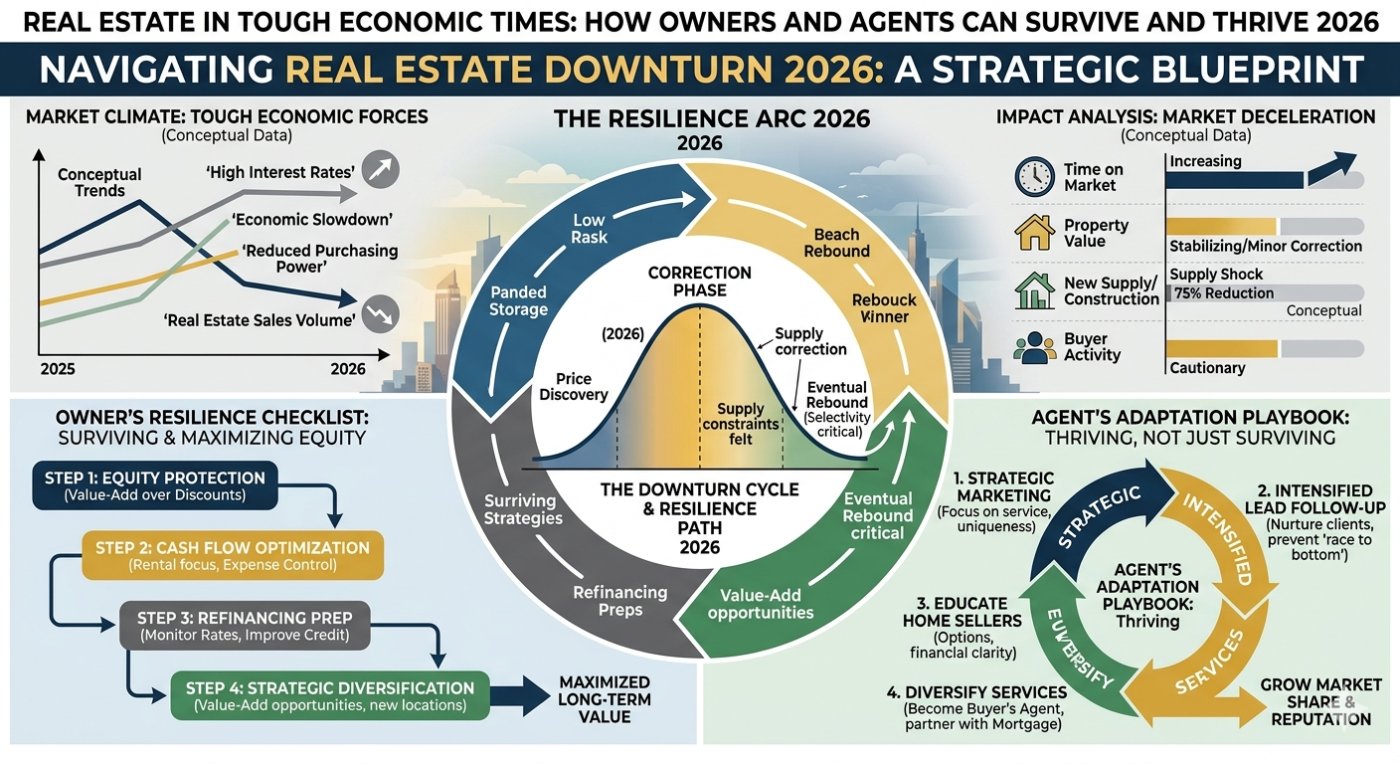
Across categories, the most resilient owners and agents tend to do a few things consistently:
Get honest about pricing. Align asking prices and rentals with current demand, not past peaks.
Protect cash flow. Build a buffer for vacancies or surprise repairs; avoid being forced into desperate decisions.
Maintain and improve. Well‑looked‑after properties rent and sell faster, especially when buyers are picky.
Communicate clearly. Tenants, buyers, and sellers all respond better when expectations are realistic and transparent.
Use data, not vibes. Track time‑on‑market, vacancy rates, applications per listing, and enquiry sources to see what is working.
Turning Tough Times into an Advantage
Tough markets are uncomfortable, but they also expose who is running property like a business and who is not. Owners and agents who:
price realistically,
look after their assets,
build strong tenant and buyer relationships, and
use feedback and reviews to improve
often come out stronger when conditions improve.